

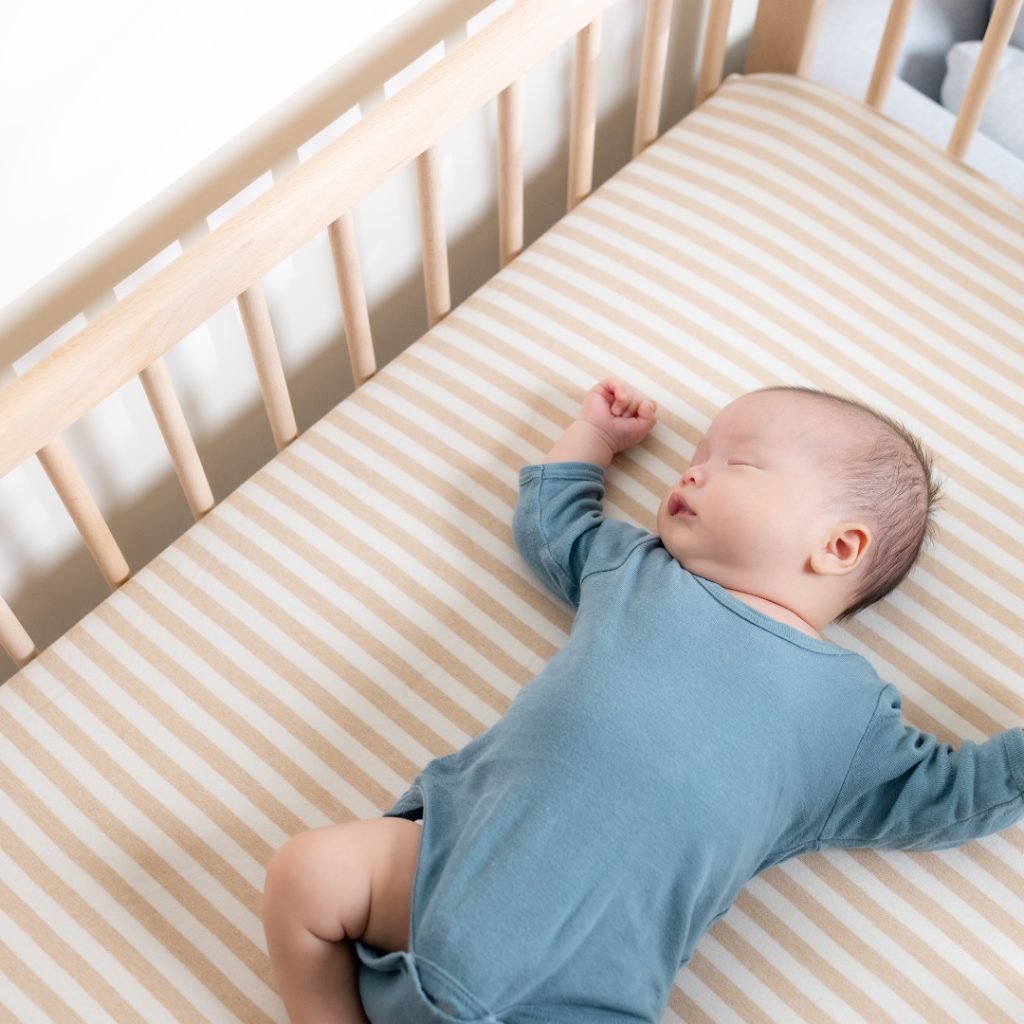
I will summarise and explain what you can expect from baby sleep between the ages of 4 –12 months, including sleep cycles, nap transitions, awake windows, and common night wakings.
I start these expectations from 4 months as by this time your little ones sleep cycles will have matured and they will now have 4 sleep cycles instead of the 2 they previously had. This does not mean to say that sleep will have sorted itself out but what it does mean is that we can start to have realistic expectations from sleep. Here you can read all about the 4 months sleep regression for a deeper understanding of what this development looks like and why it happens.
See below a list of stages of sleep development by age and what you can expect from sleep before their first birthday.
As with all aspects of infant sleep, always follow guidance from the The Lullaby Trust for safer sleep recommendations.
From 4 Months
From around 4 months old, your baby’s sleep begins to mature into sleep cycles like ours as adults. The difference is that our sleep cycles are roughly 90 minutes long whereas a child under 5 years old will have a sleep cycle that is roughly 45 minutes long.
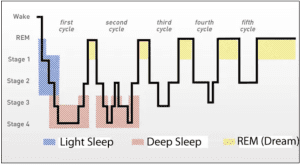
The chart above shows how at the start of the night (blue), babies usually enter a period of deep restorative sleep (red area), followed by lighter sleep cycles (yellow). Both types of sleep are essential for healthy development and serve different purposes for growth, learning, and brain development.
During lighter sleep cycles, babies are more likely to stir or partially wake. If they rely heavily on parental support to fall asleep, they may struggle to settle themselves back to sleep ‘independently’, leading to multiple night wakings.
How Much Sleep Does a Baby Need Between 4–12 Months?
Baby sleep needs change rapidly during the first year. Here’s a simple guide to what you can generally expect at each stage.
Baby Sleep at 4 – 6 Months
Following the 4-month sleep regression, babies begin developing longer stretches of deep sleep at the beginning of the night. The remainder of the night is made up of lighter sleep cycles.
It is completely normal for babies aged 4–6 months to still wake for 1 –2 night feeds. However, some babies may naturally begin taking more milk during the day and require fewer feeds overnight.
If your baby is waking frequently, it’s important to remember that not every waking is hunger related. Many babies wake because they need comfort, reassurance, or help getting back to sleep.
Typical Sleep Needs at 4–6 Months
- 3 naps per day
- Around 3 – 4 hours of daytime sleep
- Awake windows of approximately 1 hour 30 minutes – 2 hours 30 minutes.
Understanding awake windows can help you plan your day and support better naps and bedtime sleep.
Baby Sleep at 6–7 Months
At around 6 months, babies begin their weaning journey and start exploring solid foods. While this is an exciting milestone, milk remains their primary source of nutrition initially.
As babies adjust to solids, sleep patterns can fluctuate. Changes in digestion, developmental milestones, and nap transitions may all impact sleep during this stage.
Typical Sleep Needs at 6–7 Months
- Transitioning from 3 naps to 2 naps
- Around 3 hours – 3 hours 30 minutes of daytime sleep
- Awake windows of approximately 2 hours 30 minutes – 3 hours.
Many families find this nap transition challenging, particularly if naps become short or inconsistent.
Baby Sleep at 7–9 Months
Between 7 – 9 months, babies usually become more confident with solids and gradually rely less on milk for nutrition.
Although they may be eating more during the day, night wakings can still happen especially if your little one has not yet learned how to fall asleep independently. In many cases, babies wake because they need support returning to sleep rather than because they are hungry.
This stage is also full of major developmental milestones such as crawling, sitting, pulling up, and separation anxiety, all of which can temporarily affect sleep.
Typical Sleep Needs at 7–9 Months
- 2 naps per day
- Around 3 hours of daytime sleep
- Awake windows of approximately 3 hours
Baby Sleep at 10 – 12 Months
As your baby approaches their first birthday, many healthy babies can physically sleep through the night without needing a feed.
That said, some babies may still wake due to habit, comfort needs, teething, illness, or developmental changes.
Consistency with sleep routines and independent sleep skills can make a huge difference during this stage.
Typical Sleep Needs at 10–12 Months
- 2 naps per day
- Around 2 hours – 2 hours 30 minutes of daytime sleep
- Awake windows of approximately 3 hours – 3 hours 30 minutes
What Happens After 12 Months?
You made it your baby is turning one!
Hopefully, your little one has developed healthy sleep habits and your family is feeling more rested. The toddler years bring new sleep challenges, including nap transitions, cot boundaries, and increased independence.
Need Support With Your Baby’s Sleep?
If you’re struggling with frequent night wakings, short naps, bedtime battles, or sleep regressions after 4 months, I can help.
My Child in the Cot Package is designed to support families with babies over 4 months old, helping you build healthy, responsive sleep habits that work for your family


